Table of Contents
Introduction: The Photoshoot Model Is Breaking Down
What Is a Photoshoot Alternative for E-Commerce?
Why More Brands Are Walking Away From Traditional Photography
Top 10 Signs Your Brand Needs a Photoshoot Alternative Right Now
Sign 1: Your Product Launch Timelines Keep Slipping Because of Image Delays
Sign 2: Your Photography Costs Are Eating Into Your Marketing Budget
Sign 3: Your Product Images Look Inconsistent Across Your Catalog
Sign 4: You Cannot Afford to Photograph Every Color Variant
Sign 5: Your Competitors' Listings Look Better Than Yours
Sign 6: You Are Missing A+ Content Because It Is Too Expensive to Produce
Sign 7: Your Return Rates Are Higher Than They Should Be
Sign 8: You Have No Video or Animation Content for Your Listings or Ads
Sign 9: You Cannot Create Visuals for Products Still in Development
Sign 10: Your Visual Content Cannot Scale With Your Business Growth
What Happens When You Switch to a CGI Photoshoot Alternative
CGI vs Traditional Photoshoot: The Full Comparison
How to Evaluate a Photoshoot Alternative for Your Brand
How SMAPIT Delivers the Best Photoshoot Alternative for E-Commerce
Industries Making the Switch to CGI Right Now
FAQs About Photoshoot Alternatives for E-Commerce
Final Thoughts: Stop Letting Your Photoshoot Hold Your Brand Back
Introduction: The Photoshoot Model Is Breaking Down
There was a time when booking a product photoshoot was simply what e-commerce brands did. You manufactured the product, shipped it to a studio, paid the photographer, waited for the edited images, and listed your product. The system worked — slowly, expensively, and with limited flexibility — but it worked.
That time is ending.
The e-commerce landscape in 2026 moves at a pace that traditional product photography was never designed to support. Product launches happen faster. Catalogs grow larger. Platform requirements multiply. Variant ranges expand. Seasonal campaigns demand fresh creative on shorter cycles. And the visual quality bar — set by the best-funded brands in every category — keeps rising.
Traditional photoshoots cannot keep up. Not on speed. Not on cost. Not on flexibility. And not on scale.
The brands feeling this most acutely are the ones that have grown past the stage where a single annual photoshoot covers their visual content needs — but haven't yet found a better system. They are stuck between the limitations of traditional photography and the demands of a modern e-commerce business that needs more images, more formats, more variants, and more creative flexibility than any studio schedule can realistically deliver.
The solution is a photoshoot alternative for e-commerce — specifically, CGI product visualization and 3D rendering, which replaces the physical studio with a digital production pipeline that is faster, cheaper, more flexible, and infinitely more scalable.
This article identifies the top 10 signs that your brand needs to make this switch right now — each one a real frustration experienced by real e-commerce brands — and shows exactly how SMAPIT, India's leading CGI studio, solves each one.
What Is a Photoshoot Alternative for E-Commerce?
A photoshoot alternative for e-commerce is any visual content production method that replaces the traditional camera-based studio photoshoot with a more efficient, scalable, and cost-effective approach.
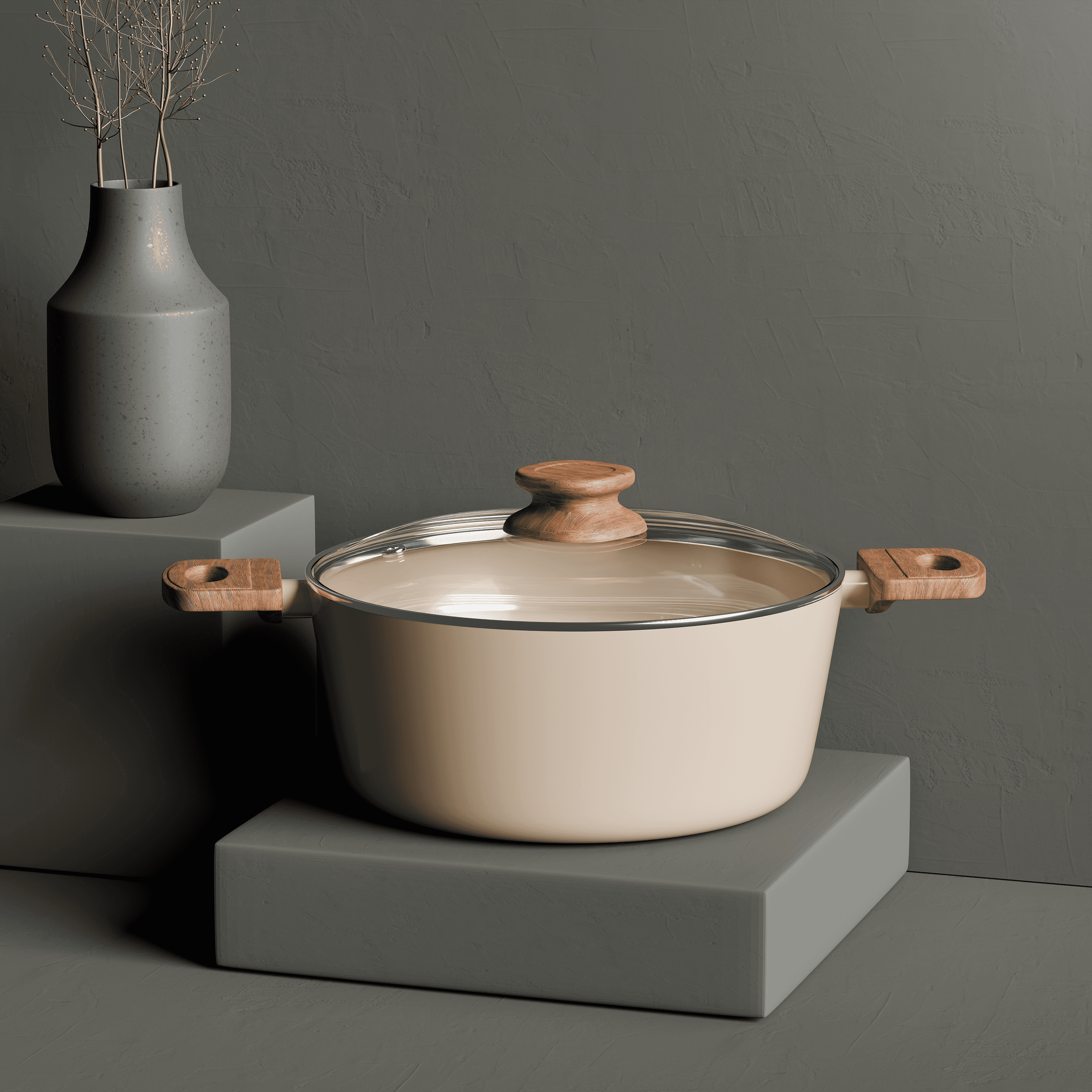
In practice, the most powerful and widely adopted photoshoot alternative today is CGI product visualization — the creation of photorealistic product images using 3D modeling software and computer-generated imagery. Instead of placing a physical product under studio lights and capturing it with a camera, a 3D artist builds a precise digital model of the product and renders it into final images, animations, and interactive assets entirely in software.
The output is visually indistinguishable from traditional photography — photorealistic, platform-compliant, and conversion-optimized — but produced through a workflow that is structurally superior on every operational dimension:
Faster — standard delivery in 3 to 5 business days versus 2 to 4 weeks for a photoshoot
Cheaper — 60 to 70% lower cost at catalog scale versus recurring photography costs
More flexible — any background, any environment, any angle, any variant in software
More scalable — one 3D model produces every format for every platform indefinitely
More versatile — static renders, lifestyle images, A+ content, 360° views, animations, and AR assets all from one model
Studios like SMAPIT — a CGI and 3D visualization studio based in Gurugram, India, serving brands across India, the US, and the UAE — have built complete photoshoot alternative pipelines that cover every visual content need an e-commerce brand has, across every platform, at any catalog scale.
Why More Brands Are Walking Away From Traditional Photography
The shift away from traditional photoshoots is not happening because CGI is a novelty. It is happening because the economics and operational realities of traditional photography have become genuinely incompatible with the demands of modern e-commerce.
The cost structure is wrong for scale. Traditional photography costs are largely fixed per shoot — studio, photographer, lighting, props, post-production — regardless of how many usable images are produced. As catalog size grows, these fixed costs repeat. There is no compounding efficiency, no economy of scale, no decreasing marginal cost per image. Every new product, every new variant, every new season restarts the cost clock.
The timeline is wrong for competitive markets. Two to four weeks from scheduling to final image delivery is simply too slow for brands operating in competitive categories where listing speed affects ranking and revenue. The brands that get listed fastest with the best images win the early sales that drive Amazon's organic algorithm — and traditional photography cannot consistently deliver the speed needed to win that race.
The flexibility is wrong for modern campaign demands. Brands need to refresh their creative more frequently — for seasonal campaigns, for A/B testing, for platform-specific formats, for promotional events. Traditional photography has no mechanism for fast, low-cost creative refresh. Every change is a reshoot.
These structural problems are driving a broad industry shift toward CGI as the default photoshoot alternative for e-commerce — and the brands making the switch earliest in their categories are building visual content advantages that their photography-dependent competitors cannot easily close.
Top 10 Signs Your Brand Needs a Photoshoot Alternative Right Now
Sign 1: Your Product Launch Timelines Keep Slipping Because of Image Delays
You have a product ready. Your listing is drafted. Your PPC campaign is planned. And you are waiting — again — for the photoshoot to be scheduled, completed, edited, and delivered before you can go live.
This is one of the most common and most costly frustrations in e-commerce visual content production. Product launch timelines slip not because of manufacturing delays or logistics problems, but because getting high-quality product images through a traditional photoshoot takes too long.
The math is straightforward and painful. A typical photoshoot booking requires 1 to 2 weeks of lead time for scheduling. The shoot itself takes a day. Post-production editing and retouching takes another 1 to 2 weeks. By the time final images are delivered, 3 to 4 weeks have passed since you first needed them — and your product launch has slipped by a month.
In competitive Amazon categories, a month-long listing delay has real revenue consequences. It is a month of sales lost to competitors. A month of PPC history not being built. A month of early reviews not being generated. A month of organic ranking momentum not being accumulated.
CGI as the solution: SMAPIT delivers standard Amazon listing image packages — 7 to 9 images per SKU — within 3 to 5 business days from brief sign-off. For brands with urgent launch requirements, rush timelines are available. The structural bottleneck of photoshoot scheduling and post-production is eliminated entirely.
If your product launches are consistently delayed by image production timelines, that delay is the clearest possible signal that your current visual production system is not fit for purpose — and a photoshoot alternative is not a nice-to-have but an operational necessity.
Sign 2: Your Photography Costs Are Eating Into Your Marketing Budget
Calculate what your brand spent on product photography in the last twelve months. Include studio rental, photographer fees, lighting and equipment costs, props and styling, post-production retouching, travel where applicable, and any reshoots caused by product updates or creative dissatisfaction. Now consider what percentage of your total marketing budget that represents.
For many e-commerce brands — particularly those in growth phases managing expanding product ranges — the answer is uncomfortable. Photography costs that seemed manageable at ten products become significant at fifty, and genuinely constraining at one hundred or more. The budget that should be going toward paid acquisition, influencer partnerships, or market expansion is instead being consumed by a visual production process that has not changed fundamentally in decades.
Traditional photography has no natural cost efficiency at scale. Every new SKU requires a new shoot. Every new variant requires additional production. Every seasonal refresh requires a return to the studio. The cost compounds with the catalog and the calendar — indefinitely.
CGI as the solution: 3D product rendering services operate on a fundamentally different cost structure. The primary investment is building the 3D model — a one-time cost that becomes a permanent, reusable asset. Every subsequent render from that model — new angles, new backgrounds, new lifestyle scenes, new color variants, new campaign treatments — costs a fraction of the original modeling investment. Brands managing large catalogs consistently report overall visual production cost reductions of 60 to 70% after switching to CGI.
If photography costs are competing with your marketing budget for the same finite resources, the cost structure of your visual production is wrong — and a photoshoot alternative is the structural fix.
Sign 3: Your Product Images Look Inconsistent Across Your Catalog
Open your Amazon storefront or Shopify collection page and look at your product images side by side. Do they all look like they belong to the same brand? Same lighting quality? Same white balance? Same shadow treatment? Same overall visual aesthetic?
For most brands relying on traditional photography — especially those that have grown their catalog over time across multiple photoshoots with different photographers or studios — the answer is no. And the visual inconsistency is more damaging than it might appear.
Catalog consistency is a powerful, often underestimated driver of brand trust. When a shopper browses a product range and every image looks subtly different — different brightness, different shadow quality, different color temperature, different cropping style — the implicit message is disorganization. It erodes the sense of a coherent, professional brand identity. And in categories where purchase decisions are made partly on brand perception, that erosion translates directly into lost conversions.
The root cause is structural. Traditional photography cannot guarantee consistency across shoots conducted at different times, in different studios, by different photographers. Even the best photographer working across multiple sessions will produce subtle variations. Lighting equipment changes. Camera settings shift. Editing judgments differ from session to session.
CGI as the solution: 3D product rendering produces every image from the same virtual lighting setup, the same render settings, the same material definitions, and the same camera parameters. The output is pixel-level consistency across every image in a catalog — regardless of how many SKUs, how many variants, or how much time passes between production runs. A product added to the catalog eighteen months after the original range was rendered looks identical in quality and style to the original images.
If your catalog looks like it was built by multiple different brands rather than one coherent visual identity, inconsistency is the symptom — and CGI rendering is the cure.
Sign 4: You Cannot Afford to Photograph Every Color Variant
Your product comes in eight colors. Or twelve fabric options. Or five finish variants. And your listing images show three of them — because photographing every variant through a traditional studio shoot would cost more than the variant inventory itself is worth at early sales volumes.
This is an extraordinarily common problem for e-commerce brands with variant-heavy product ranges. The cost and logistics of traditional variant photography create a difficult trade-off: either invest heavily in photographing every variant before you know which ones will sell, or list variants with incomplete or mismatched images and accept the conversion penalty.
Neither option is good. Incomplete variant images create a poor shopping experience and reduce confidence in variants that aren't fully represented. But over-investing in variant photography for slow-moving colors or sizes is a genuine waste of production budget.
Amazon's own listing guidelines recommend that each product variant have its own complete set of high-quality images. Meeting that recommendation through traditional photography is impractical for most mid-sized sellers managing broad variant ranges.
CGI as the solution: Once a base 3D model of a product exists, generating variant renders is a software operation. A different color is a material property change. A different fabric is a texture map swap. A different finish is a shader adjustment. Every variant render is produced to identical quality, identical lighting, identical composition — and at a fraction of the cost of a variant reshoot. Brands can afford to represent every variant completely — because the marginal cost of each additional variant render is minimal.
If your variant images are incomplete, mismatched, or missing entirely, your listing is losing conversions on every variant that isn't fully represented — and a photoshoot alternative is the direct solution.
Sign 5: Your Competitors' Listings Look Better Than Yours
Search for your primary product keyword on Amazon. Look at the top three or four listings in your category. Now compare their images to yours. Are their main images sharper, better lit, and more professionally presented? Do their lifestyle images show the product in more compelling, aspirational contexts? Do they have A+ content sections with rich visual modules while your listing has a plain text description?
If the answer to any of these questions is yes, you are losing sales to visual quality — not product quality. And in a marketplace where shoppers make purchase decisions in seconds based primarily on images, a visual quality gap is as damaging as a price disadvantage.
The brands winning visually on Amazon are not all larger or better-funded than their competitors. Many of them have simply adopted more efficient visual production systems — CGI rendering — that allow them to produce higher quality, more complete image stacks at lower cost and faster turnaround than traditional photography permits.
This creates a compounding competitive dynamic. Better images produce better click-through rates and conversion rates. Better conversion rates improve organic ranking. Better organic ranking drives more traffic. More traffic generates more reviews and sales history. And Amazon's algorithm rewards the result with even better placement — making the initial visual quality gap increasingly difficult for slower-moving competitors to close.
CGI as the solution: SMAPIT produces Amazon listing image stacks — compliant main images, lifestyle renders, A+ content modules, infographic panels, 360-degree views — that match or exceed the visual quality of the best-performing listings in any category. And because CGI is faster and cheaper than traditional photography, brands using SMAPIT can maintain visual quality parity with larger competitors without proportional production budgets.
If your competitors look better than you on Amazon, the gap is almost certainly closeable — and CGI is the fastest route to closing it.
Sign 6: You Are Missing A+ Content Because It Is Too Expensive to Produce
A+ content is one of the highest-ROI features on Amazon for Brand Registered sellers. Amazon's own data shows it increases conversion rates by up to 8%. Yet a significant proportion of eligible Amazon sellers do not have A+ content on their listings — not because they are unaware of the feature, but because producing a complete, high-quality A+ content image set through traditional photography is expensive, logistically complex, and time-consuming.
A complete A+ content section requires multiple image modules — brand story visuals, feature highlight panels, lifestyle images, comparison charts, product detail close-ups — each built to Amazon's specific module dimensions and optimized for mobile display. Producing this set through traditional photography means multiple shooting setups, significant post-production graphic design work, and a production timeline that often stretches to several weeks.
For brands managing multiple product listings, replicating this production investment across each listing makes A+ content feel prohibitively expensive — and many sellers either skip it entirely or produce it at a quality level that undermines rather than supports their listing performance.
CGI as the solution: SMAPIT produces complete A+ content image sets as a standard component of its Amazon product visualization packages. Every module is built from the same 3D model used for listing images — ensuring perfect visual consistency between the main listing and the A+ section. Modules are designed mobile-first, built to Amazon's exact specifications, and delivered ready for upload to Seller Central. The marginal cost of adding A+ content to a CGI listing package is a fraction of what standalone A+ content production costs through traditional photography.
If your listings are missing A+ content — or have A+ content that doesn't match your listing image quality — you are leaving measurable conversion rate improvement on the table every day.
Sign 7: Your Return Rates Are Higher Than They Should Be
Product returns on e-commerce are expensive. They cost in reverse logistics, restocking time, inventory condition degradation, and the seller metric impact on Amazon — where high return rates can trigger increased scrutiny and suppress listing performance. But the root cause of many product returns is not product quality. It is a mismatch between what the product looks like in the listing images and what arrives in the customer's hands.
This mismatch happens when listing images fail to accurately represent the product's color, scale, texture, finish, or physical form. A sofa that appears to be a rich charcoal grey in a poorly lit photograph arrives looking closer to navy blue in natural light. A kitchen appliance that looks compact in an isolated product image turns out to be significantly larger than the customer assumed. A bag that looks like premium leather in a low-resolution photograph reveals its material quality clearly on arrival.
Traditional photography is particularly prone to these representation failures because of the uncontrolled variables involved — lens distortion, lighting color temperature, background reflection, and post-production color editing all introduce gaps between the photographic representation and the product reality.
CGI as the solution: 3D product rendering produces images with precise material accuracy — colors are defined to exact values, textures are modeled at microscale, dimensions are mathematically accurate. A CGI render of a product shows exactly what the product looks like, in controlled and accurate conditions, from every relevant angle. Brands using CGI listing images consistently report lower return rates — because customers buy with complete and accurate visual information rather than incomplete or misleading photography.
If your return rates are elevated and the feedback cites product appearance expectations not being met, your listing images are the problem — and accurate CGI rendering is the solution.
Sign 8: You Have No Video or Animation Content for Your Listings or Ads
Amazon allows sellers to add a product video to their listing. Meta, TikTok, Instagram, and YouTube are fundamentally video-first platforms where static creative is increasingly disadvantaged in algorithm distribution and paid ad performance. And yet a significant proportion of e-commerce brands have no video content for their products — or have outdated, low-quality video that underperforms against the creative standard their category now demands.
The reason is almost always production cost and complexity. Professional product video production through a traditional filming approach — videographer, director, location or studio, post-production editing — costs significantly more than photography and takes significantly longer. For brands already stretched by photography budgets, adding video production is a financial step too far.
The result is that brands with no video content are missing the Amazon listing video slot entirely — leaving a proven conversion driver unused. They are running static image ads on video-native platforms where video ads consistently deliver higher click-through rates and lower cost per acquisition. And they are absent from short-form video formats — Instagram reels, TikTok, YouTube shorts — where product discovery is growing fastest.
CGI as the solution: 3D product animation produces Amazon listing videos, social media video ads, and short-form content entirely from the same 3D model used for all other rendering deliverables. The incremental cost of producing a CGI animation from an existing 3D model is a fraction of the cost of a separate video production. SMAPIT produces product animations formatted for Amazon's listing video slot, Meta and TikTok ad formats, Instagram reels, and YouTube pre-roll — from a single model, on the same production timeline as the static render package.
If you have no video content for your listings or ads, you are competing with one hand tied behind your back in every platform where video drives discovery and conversion.
Sign 9: You Cannot Create Visuals for Products Still in Development
Your manufacturing lead time is twelve weeks. Your product will be ready to ship in three months. And you cannot create a single listing image, run a single pre-launch ad, or build your Amazon listing until the physical product exists and can be shipped to a photography studio.
This sequential dependency — product must exist before images can be created — is one of the most significant operational constraints of traditional photography. It means that every product launch starts from zero on day one of physical product availability. No pre-launch visual content. No early listing optimization. No pre-launch advertising. No demand generation before the product arrives.
In competitive categories, this cold-start problem is costly. Brands that arrive at their launch date with a fully optimized listing, established PPC campaigns, and early traffic already flowing have a significant advantage over brands that are still producing listing images when their inventory lands at the FBA warehouse.
CGI as the solution: 3D product rendering begins from data — CAD files, technical drawings, packaging artwork, design references — not from a physical product. SMAPIT regularly produces complete Amazon listing image stacks for products still in manufacturing, enabling brands to build and optimize their listing, run pre-launch advertising, generate early wishlist activity, and arrive at their launch date with visual content already prepared and a marketing funnel already active.
The competitive advantage of pre-launch visual content is compounding. Every week of pre-launch listing activity — optimized content, early traffic, initial reviews — translates into stronger organic ranking from day one of product availability.
If your launch strategy is constrained by the need for a physical product before visuals can be created, you are starting every launch behind — and a photoshoot alternative removes that constraint entirely.
Sign 10: Your Visual Content Cannot Scale With Your Business Growth
You started with ten products. Now you have fifty. Next year you are planning to launch thirty more. And the thought of photographing every new product, every new variant, every new seasonal campaign through a traditional photoshoot schedule is becoming genuinely overwhelming — in cost, in time, in logistics coordination, and in the sheer operational complexity of managing a visual production pipeline that grows linearly with every product added.
This scaling problem is where the structural limitations of traditional photography become most apparent and most damaging. Photography costs and timelines scale linearly — every new product adds proportionally to the production burden. There is no leverage, no compounding efficiency, no mechanism for producing more visual content faster at lower cost per unit as volume grows.
For brands with genuine growth ambitions — expanding product ranges, entering new markets, launching seasonal collections, building out variant ranges — this linear scaling problem eventually becomes a growth constraint. The visual production pipeline becomes the bottleneck that limits how fast the brand can launch, how many products it can list completely, and how quickly it can refresh its creative.
CGI as the solution: 3D product rendering scales with a fundamentally different cost structure. 3D models for similar products share design elements, reducing modeling time and cost for expanding product families. Variant renders are marginal cost additions to existing models. New lifestyle scenes can be built once and reused across multiple product placements. The marginal cost of adding visual content decreases as the 3D asset library grows — the opposite of traditional photography, where every addition costs as much as the first.
SMAPIT operates production pipelines capable of handling large catalog volumes with consistent quality and controlled timelines — making catalog-scale CGI practical and affordable for brands at every growth stage.
If your visual production pipeline is already struggling to keep up with your current catalog and you have ambitious growth plans, traditional photography will become an increasingly severe constraint. The time to switch is before the bottleneck becomes a crisis.
What Happens When You Switch to a CGI Photoshoot Alternative
For brands making the transition from traditional photography to CGI product rendering, the operational changes are immediate and the results are measurable. Here is what the transition typically looks like:
Week 1 — Brief and modeling. The brand provides product references, technical specifications, and creative direction. SMAPIT builds the 3D model. No studio booking. No product shipping. No scheduling coordination.
Week 2 — First renders and review. Draft renders are shared for feedback. Lighting, angles, environments, and material accuracy are reviewed and adjusted. This collaborative review process is faster and more precise than photography retouching because changes are made in software rather than requiring a reshoot.
Week 2 to 3 — Final delivery. Final renders are delivered formatted to the specifications of every required platform. The 3D model is retained as a permanent asset ready for future variant renders, campaign creatives, animations, or AR exports.
Ongoing — Asset leverage. Every future visual content need — new variant, new campaign, new platform format, new seasonal treatment — is served from the existing 3D model at a fraction of the original production cost. The asset appreciates in value with every use.
The operational experience of working with a CGI photoshoot alternative is fundamentally different from managing a traditional photoshoot — and consistently described by brands that have made the switch as faster, more collaborative, more flexible, and more cost-efficient than anything traditional photography could offer.
CGI vs Traditional Photoshoot: The Full Comparison
Factor | CGI Photoshoot Alternative | Traditional Photography |
|---|
Turnaround time | 3–5 business days | 2–4 weeks |
Cost at catalog scale | 60–70% lower | Grows linearly per SKU |
Variant production | Software material swap | Full reshoot per variant |
Consistency across catalog | Pixel-perfect every time | Variable between shoots |
Creative flexibility | Unlimited environments | Limited to physical sets |
Pre-launch visuals | Yes — from CAD/drawings | No — needs physical product |
Video and animation | CGI animation from 3D model | Separate expensive production |
A+ content production | Standard from 3D model | Complex and costly |
360-degree views | Produced from same model | Requires specialist rig |
AR asset capability | Built-in from 3D model | Not possible |
Platform compliance | Built into workflow | Requires post-production |
Scalability | Decreasing marginal cost | Constant marginal cost |
Asset reusability | Permanent 3D master model | Single-use image files |
How to Evaluate a Photoshoot Alternative for Your Brand
Not all CGI studios are equal. When evaluating a photoshoot alternative for your e-commerce brand, here are the key criteria to assess:
Portfolio quality and realism. Review the studio's existing render portfolio critically. Do the images look photorealistic? Do material surfaces — glass, metal, fabric, leather — behave accurately under light? Are lifestyle environments convincingly real? The quality ceiling of the studio's portfolio is the quality ceiling of your renders.
Category experience. Has the studio produced renders for products in your category? Consumer electronics, furniture, beauty, fitness, and food packaging all have specific visual challenges that require category-specific expertise. A studio with proven category experience will understand the visual conventions and material behaviors of your product type from day one.
Full-spectrum deliverables. Can the studio produce every deliverable you need from a single 3D model — silo renders, lifestyle images, A+ content, infographic panels, 360-degree views, animations, and AR assets? A studio that covers the full spectrum maximizes the ROI of your modeling investment.
Platform compliance knowledge. Does the studio understand the specific requirements of Amazon, Shopify, Meta, and other platforms? Renders delivered without platform compliance built in create additional post-production work and delay.
Turnaround and communication. What is the studio's standard turnaround time, and how do they manage client communication through the review and revision process? Fast, transparent communication is as important as render quality in a production partnership.
Pricing transparency. Is the studio's pricing structure clear and predictable? Can you understand the cost of a standard SKU package, and the incremental cost of additional deliverables?
How SMAPIT Delivers the Best Photoshoot Alternative for E-Commerce
SMAPIT is a CGI and 3D visualization studio headquartered in Gurugram, India, serving e-commerce brands across India, the United States, and the UAE. With 4+ years of deep 3D production expertise and an AI-powered production pipeline, SMAPIT is trusted by 50+ brands as their primary photoshoot alternative for e-commerce visual content.
What makes SMAPIT the right photoshoot alternative:
One model, every deliverable. SMAPIT builds one precise 3D master model per product and uses it to produce every deliverable — silo renders, lifestyle renders, A+ content, infographic panels, 360-degree spin sets, animations, and AR-ready assets — without rebuilding for each format. This maximizes the ROI of the modeling investment for every brand.
AI-powered production speed. SMAPIT's AI Labs division integrates artificial intelligence into the CGI workflow — enabling faster scene generation, smarter lighting optimization, and high-volume creative output that traditional studios cannot match on speed or scale.
Proven cross-industry expertise. SMAPIT's client portfolio spans consumer electronics, home appliances, beauty and personal care, fitness equipment, baby products, furniture, automotive accessories, food and beverage packaging, and lifestyle accessories — demonstrating category-specific expertise across every major e-commerce vertical.
Platform compliance built in. Every deliverable is formatted to the exact specifications of its target platform — Amazon, Shopify, Flipkart, Meta, TikTok — from the first delivery. No additional post-production required.
Global operations, fast turnaround. Operating across IST, GST, and EST time zones, SMAPIT delivers standard Amazon image packages within 3 to 5 business days and maintains continuous project progress for brands across India, the Middle East, and North America.
👉 Photoshoot Alternative for Ecommerce
Industries Making the Switch to CGI Right Now
Every major e-commerce product category is seeing adoption of CGI as the primary photoshoot alternative — driven by the specific visual production challenges each industry faces:
Consumer Electronics — Reflective surfaces, complex variant ranges, and fast product cycles make traditional photography expensive and slow. CGI handles all three challenges simultaneously.
Furniture and Home Décor — Large product size, high shipping costs, and the need for room environment context make traditional location shoots prohibitively expensive. CGI virtual environments replace location costs entirely.
Beauty and Skincare — Frequent packaging updates, large SKU ranges, and the demand for flawless surface rendering make CGI's precision and iteration speed essential for beauty brands scaling their Amazon presence.
Fashion and Accessories — Variant volume across colors, materials, and sizes makes traditional variant photography unaffordable at scale. CGI material swaps deliver every variant at minimal incremental cost.
Food and Beverage Packaging — Perishability, food styling complexity, and FMCG catalog scale make traditional food photography impractical for most mid-sized brands. CGI packaging renders solve all three.
Fitness Equipment — Large product size, home and gym environment staging requirements, and growing DTC channel demands make CGI the only practical visual production solution for fitness brands scaling their online presence.
FAQs About Photoshoot Alternatives for E-Commerce
What is the best photoshoot alternative for e-commerce brands?
The most effective and widely adopted photoshoot alternative for e-commerce is CGI product visualization — the creation of photorealistic product images using 3D modeling and rendering software. CGI delivers equivalent or superior visual quality to traditional photography at lower cost, faster turnaround, and with dramatically greater flexibility and scalability. Studios like SMAPIT deliver complete e-commerce visual stacks — listing images, lifestyle renders, A+ content, animations, and AR assets — entirely through CGI.
Is CGI product photography as good as real photography?
Modern CGI product photography using physically based rendering technology produces images that are indistinguishable from real photographs for the vast majority of consumers. Material accuracy, light simulation, and surface detail are rendered with mathematical precision. Across millions of Amazon listings globally, CGI renders have demonstrated equivalent — and in many cases superior — conversion performance to traditional photography.
How much cheaper is CGI compared to a traditional photoshoot?
Brands consistently report overall visual production cost savings of 60 to 70% after switching from traditional photography to CGI rendering — particularly when accounting for variant image production, catalog scale, and recurring seasonal refresh costs. The primary investment in 3D modeling is offset rapidly by the elimination of recurring studio, photographer, and post-production costs.
How fast can I get product images from a CGI studio?
SMAPIT delivers standard Amazon listing image packages of 7 to 9 images per SKU within 3 to 5 business days from brief sign-off. This compares to 2 to 4 weeks for a typical traditional photoshoot from scheduling to final delivery. Rush timelines are available for time-sensitive product launches.
Can CGI images be used on Amazon?
Yes. Amazon explicitly permits CGI and 3D rendered images on product listings, provided they accurately represent the product being sold. SMAPIT produces all renders to Amazon's full compliance specifications — correct background values, minimum resolution, sRGB color profile, and JPEG file format.
What do I need to provide to get started with CGI rendering?
SMAPIT can work from product dimensions, reference photographs, CAD files, packaging artwork, and material specifications. For products still in development, design files and technical drawings are sufficient to begin. The team guides every client through the brief process from the first conversation — no specialist technical knowledge is required from the brand.
Can I get CGI renders for products that are not yet manufactured?
Yes. This is one of the most significant advantages of CGI over traditional photography. SMAPIT regularly produces complete Amazon listing image stacks from pre-production design references — enabling brands to build listings, run pre-launch advertising, and generate early demand before physical inventory exists.
Will switching to CGI mean my images look less authentic or less trustworthy?
No. The goal of professional CGI product visualization is photorealism — producing images that look exactly like high-quality photographs. Consumers viewing CGI renders on Amazon listings do not know they are looking at rendered images rather than photographs. The visual standard of professional CGI rendering is set by market demand for images that build purchase confidence — and modern CGI meets and exceeds that standard consistently.
Is CGI rendering only for large brands with big budgets?
No. CGI product rendering is accessible and cost-effective for brands of all sizes. The elimination of recurring studio and photography costs makes CGI particularly advantageous for growing brands that need to scale visual content production without proportional budget increases. SMAPIT works with brands across all size categories — from emerging DTC labels to established catalog sellers.
How do I know if my brand is ready to switch to a photoshoot alternative?
If you recognize any of the ten signs outlined in this article — delayed launches, rising photography costs, inconsistent images, missing variants, competitors looking better, absent A+ content, elevated returns, no video content, pre-launch visual constraints, or scaling difficulties — your brand is ready. The question is not whether to switch but how quickly.
Final Thoughts: Stop Letting Your Photoshoot Hold Your Brand Back
Every sign in this article points to the same underlying truth: traditional photography is a constraint on e-commerce growth. It is too slow, too expensive, too inflexible, and too difficult to scale for the demands of modern e-commerce. And the brands that recognize this earliest — and switch to a CGI photoshoot alternative before their competitors do — gain a compounding visual content advantage that becomes increasingly difficult to close.
The good news is that switching is easier than most brands expect. You do not need to abandon your existing visual content overnight. You do not need a large upfront investment. You do not need technical expertise in 3D software. You need a capable CGI studio partner — and a first project brief.
SMAPIT is that partner. With a proven track record across 50+ brands, a full-spectrum CGI production pipeline, AI-powered production speed, and deep cross-industry expertise, SMAPIT delivers the photoshoot alternative that growing e-commerce brands need — faster, better, and more cost-efficiently than any traditional studio can.
The photoshoot had its time. The future of e-commerce visual content is CGI — and it is available to your brand right now.
👉 Get Your Free Sample Render From SMAPIT Today