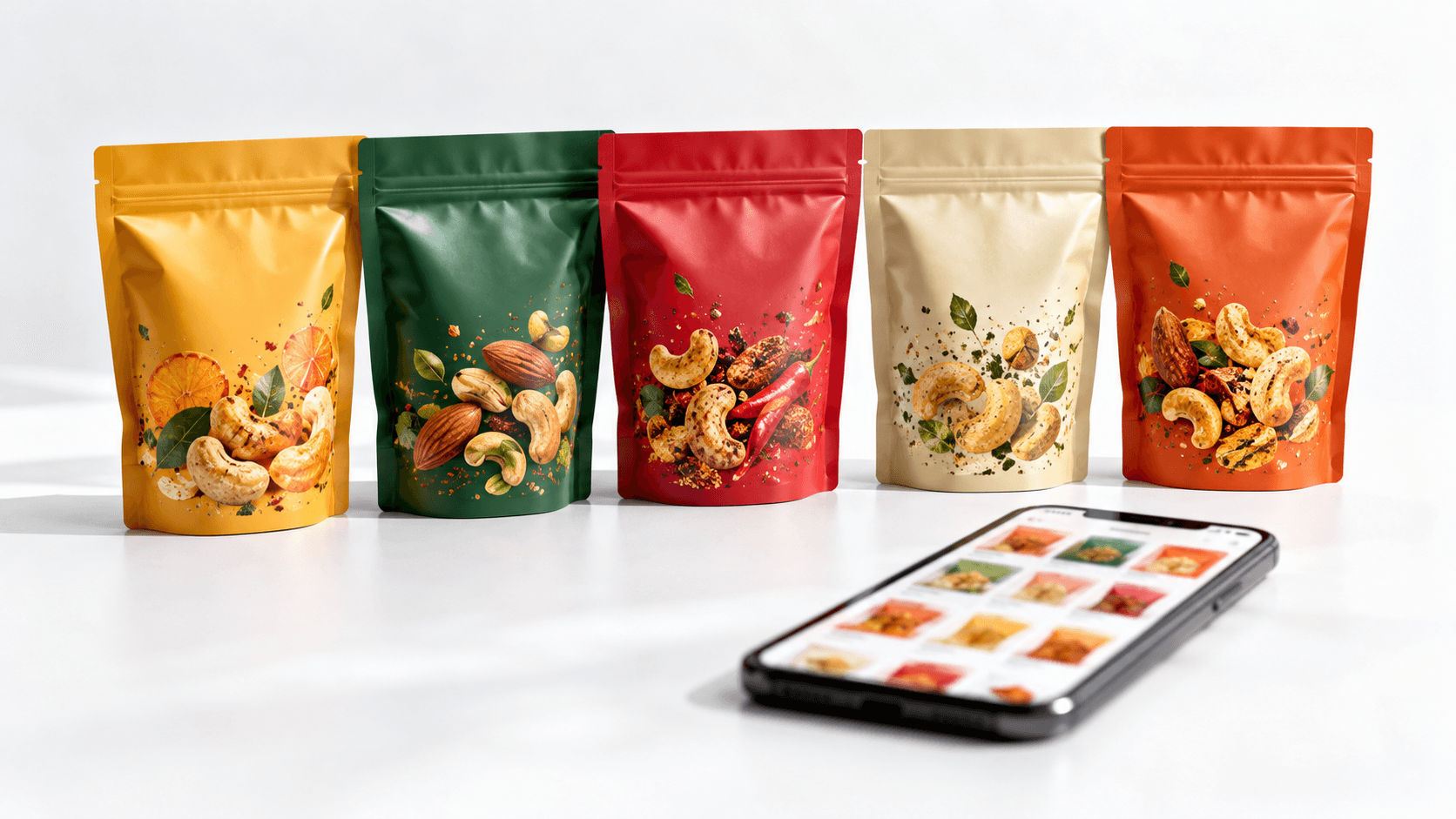
Quick commerce is a real channel for Indian brands now. RedSeer counted 33 million monthly transacting users across more than 150 Indian cities as of July 2025. It expects the channel to reach 10 percent of branded retail sales by 2030, up from 1 percent in 2024. That 2030 number is a forecast, not a result.
The practical question for a brand owner is smaller: what images do Blinkit, Zepto and Swiggy Instamart want, and is it the same set you made for Amazon? On this topic there is a big gap between what the platforms publish and what vendors claim, so this post keeps the two apart.
What the platforms officially publish about image requirements
Very little. We looked for image specification pages from Blinkit, Zepto and Instamart. None of the three appears to publish a public sheet with pixel sizes, background rules or image counts.
Blinkit announced a Seller Hub for brands on 23 October 2024, which Inc42 described as letting brands list directly without intermediaries. We could not open Blinkit's own brands page, so that is the trade press account. Third-party guides, including Confetti's, describe a category manager who is assigned to each brand after KYC and reviews the SKUs. For Zepto we found no official onboarding or image document at all. Instamart is described by third-party guides as curated onboarding through a brand team, not a self-serve signup.
So the numbers in the next section come from one vendor article, not from the platforms. Ask your category manager for the current catalogue template before you produce final files.
The minimum image set one catalogue studio describes
Confetti, a branding and packaging studio with offices in Mumbai and Dubai, published a guide on 12 June 2026 about catalogue assets for new product introduction (NPI) on the three apps. Confetti sells this service, and the platforms have not confirmed its figures, so read it as one vendor's view.
Image | What it shows | Notes in the guide |
|---|
Primary thumbnail | Front of pack, product filling most of the frame | White background. Blinkit 85 to 90 percent or more fill. Instamart white "strictly enforced". Zepto white preferred. |
Back of pack | Nutrition or ingredient panel, FSSAI number, MRP and other legal details | Consumer unit, not the outer carton |
Lifestyle or in-use | Product in context | Relevant to the category and audience |
The same guide gives 1000 x 1000 pixels as the minimum size and three images per SKU as the minimum count. Treat both as a planning target, not a rule.
How shopping on a quick commerce app differs from Amazon and Flipkart
RedSeer defines quick commerce as hyperlocal supply within 30 minutes, and says orders peak twice a day, roughly 7 to 11 AM and 6 to 10 PM. People ordering in those windows are replenishing or reacting, not researching. Our reading, which is an inference and not measured data, is that the first image does most of the work and the later ones are seen far less often than on an Amazon listing.
The listing process differs too, as this comparison shows.
Question | Amazon India | Quick commerce apps |
|---|
How do you get in? | Seller account. A+ Content needs Brand Registry. | Category manager or brand team approves each SKU, per third-party guides |
Image rules | Posts by Amazon accounts on its seller forum: pure white background, product fills 85 percent or more of the frame, only the item being sold. We did not find an official size figure. Confirm in Seller Central. | No official spec found. One vendor guide: three images, 1000 x 1000, white background. |
Long-form content | A+ Content and Brand Story for registered brands | Not found in the sources we reviewed. |
Because onboarding runs through a person who decides whether your SKU earns shelf space, your images also work as part of a pitch. That is our inference from how the guides describe the process, but it is a reason to send clean, consistent files the first time instead of a rough set to be fixed later.
For Flipkart, we could not open an official image specification. Third-party guides say the main image should have a white background but quote different sizes, so confirm it in Seller Hub.
Pack shot rules for a small screen
These are working rules from us, not platform rules. They follow from the fact that your product is judged as a thumbnail first.
Shrink your primary image to about 150 pixels wide and look at it on a phone. If the brand name, variant and weight cannot be read, change the shot.
Let the front face fill the frame. Extra table space or props make the pack smaller for no gain.
Keep the same angle and scale across variants, so a row of your flavours or sizes looks like one family.
For multi-packs, make the count obvious without reading a label.
Make the back-of-pack image sharp enough to read the legal lines. Foil glare and creases are the usual reasons it fails.
Where CGI pack shots help for quick commerce
A range with many variants is the clearest case. If you sell six flavours in three sizes, the model is built once and the label artwork is swapped, which keeps lighting and angle identical across 18 images. Glossy foil pouches, metal tins and glass also photograph badly under studio lights, and a render controls those reflections.
Timing is the other case. In a separate article on Blinkit onboarding, Confetti notes that doing catalogue photography after approval adds at least a week, so having images ready from final packaging artwork can help. But NPI also includes physical packaging compliance checks on real stock, according to the same guide. A render supports the catalogue. It does not replace compliant packs. Combos and multi-packs are covered in our post on gift hampers and bundles.
Where CGI is the wrong tool
Food shown in use, where texture and freshness sell the product, is better photographed. And any render of a back-of-pack must match the printed pack exactly, since the legal text is checked. We found no statement from Blinkit, Zepto or Instamart on whether rendered pack shots are accepted, so ask your category manager before committing a whole range.
Plan image work alongside onboarding
Vendor estimates of onboarding time vary. Confetti puts the whole Blinkit process at 6 to 12 weeks, with application review often taking 7 to 15 business days, and other vendor guides give different figures. None is official. Whatever your category turns out to need, the images should not be the step that holds you up.
Send a studio the final pack artwork, a physical sample or dieline, the list of variants, and the template your category manager gives you. Compare this set with what you already made for Amazon and Flipkart. The clean front shot may carry over. Infographic-style images with small text usually will not read on a thumbnail.
How Smapit can help
Smapit is a Gurugram-based AI-powered, human-led 3D production studio. We build 3D models, product renders and e-commerce listing images for brands in India, the US and the UAE. If you want to see how a pack shot would look at thumbnail size, request a free sample through the contact page and we will render one of your products.
Frequently asked questions
Does Blinkit publish official image requirements?
We could not find a public specification. Blinkit launched a Seller Hub for brands in October 2024, and third-party guides say the image template comes from the category manager assigned to you.
What image size should I use for quick commerce listings?
One vendor guide gives 1000 x 1000 pixels as the minimum. That is not an official figure, so confirm it against the template you receive.
Can I reuse my Amazon images on Blinkit, Zepto or Instamart?
The clean front pack shot may carry over if it has a white background and the pack fills the frame. Images with small text or heavy infographics are a poor fit for thumbnails, and you will still need a back-of-pack shot.
Do quick commerce apps need a lifestyle image?
The vendor guide we reviewed lists one in its three-image minimum. Whether each platform enforces it is not published, so ask your category manager.
Will the platforms accept CGI pack shots?
We found no published position from any of the three. The physical pack is still checked during onboarding, so a render has to match it exactly.
Sources: RedSeer, "Quick Commerce, Quicker Decisions: Is your Brand Strategy Future-ready?", 19 November 2025; Confetti, "NPI-ready catalogue assets for quick commerce", 12 June 2026; Confetti, "What happens after applying to the Blinkit seller program," 6 May 2026; Inc42, report on the Blinkit Seller Hub launch, 23 October 2024; Amazon Seller Central forum post on main image requirements (account "TaylorR_Amazon", undated); third-party onboarding guides, used only for the point that no official specs were found.