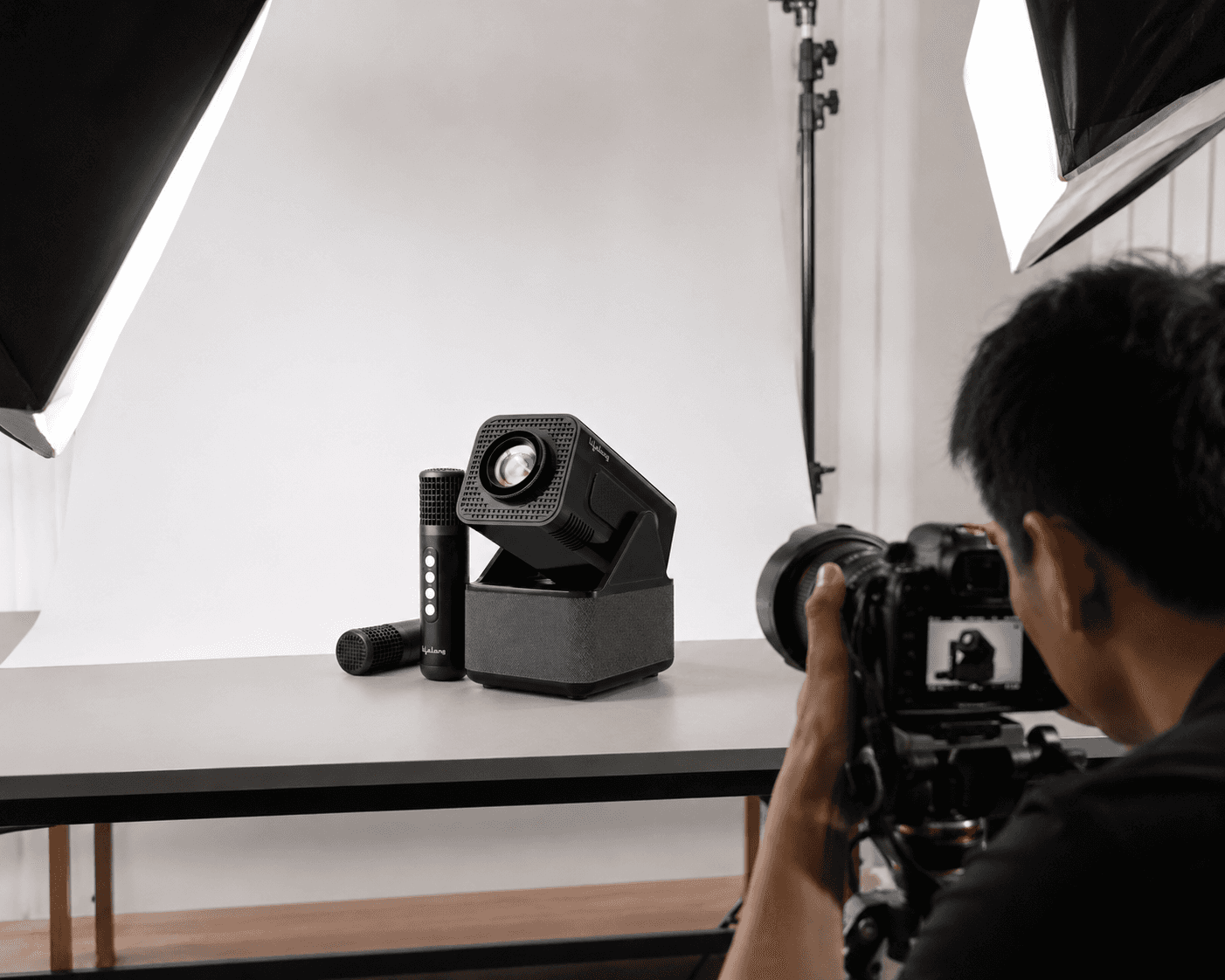
Quick Answer A photoshoot alternative for ecommerce means creating product visuals without a physical camera shoot, mainly through CGI (3D rendering) and AI-generated imagery. For Indian D2C brands, it cuts per-image cost by roughly half, removes sample-shipping delays, and lets you produce unlimited backgrounds and variants from a single 3D model. CGI is the strongest alternative for hard products like furniture, electronics and packaged goods. |
Let us start with a number that made one of our clients stop and rethink her entire content budget. She runs a skincare brand out of Gurgaon, and she was spending close to forty thousand rupees on a single photoshoot. Not per month. Per launch. Every new shade, every festive bundle, every Amazon refresh meant booking a studio, shipping samples, waiting a week, and praying the lighting matched her last set.
At Smapit, we hear a version of this story almost every week. So this guide is not a sales pitch dressed up as a blog. It is the honest version of what we tell founders when they ask us whether they should ditch the photoshoot. Some should. Some should not. By the end of this, you will know exactly which camp your brand falls into.
One stat worth keeping in mind before we go further: in a 2025 blind test run by Imagine.io, ecommerce professionals were shown a mix of real studio photos and CGI renders, and they correctly told them apart only 49.6 percent of the time. That is basically a coin flip. The quality gap that used to make this an easy decision has, for most product categories, closed.
What is a photoshoot alternative for ecommerce?
A photoshoot alternative is any method of producing product visuals that does not rely on photographing the physical item with a camera. Instead of a studio, lights and a sample, you build the product once and generate images from it digitally. The two methods that actually matter in 2026 are CGI and AI imagery.
The two real options
• CGI (3D product rendering) is computer-generated imagery. We build an exact 3D model of your product, apply real materials and lighting, and render photorealistic stills, 360-degree spins and animations. One model, infinite shots.
• AI-generated imagery uses generative tools to create or restyle product images and backgrounds. It is fast and cheap, brilliant for lifestyle scenes and social variants, but less reliable when a product needs to look dimensionally perfect every single time.
There are older alternatives people still mention, like stock backgrounds, ghost-mannequin editing or buying generic catalogue images. We are leaving those out on purpose. They are patches, not real replacements for owning your product visuals.
Why Indian D2C brands are moving away from the photoshoot
The shift is not about CGI being trendy. It is about the maths of running a fast-moving catalogue in India, where you are launching often, selling across Amazon, Flipkart, your own Shopify store and ONDC, and refreshing ad creatives almost weekly because Meta burns through them in three to five days.
1. The cost stops scaling against you
With a shoot, every new product or variant is a fresh cost. With CGI, the heavy cost is the first 3D model. After that, a new colourway or a festive background is a small render job, not another forty-thousand-rupee booking. Forrester data, widely cited across the industry, puts the content-production cost saving for brands that move to 3D pipelines at around 58 percent.
2. No samples, no shipping, no waiting
We have rendered products that did not physically exist yet. A founder sent us the design files for a bottle still in tooling, and we delivered launch-ready visuals before the first unit came off the line. You cannot photograph what has not been manufactured. You can absolutely render it.
3. One model, endless variants
This is the part founders underestimate. Once your product lives as a 3D model, we can place it on a marble countertop, a festive Diwali set, a plain Amazon-white background or a moody ad scene, all without touching the product again. For a brand running performance ads, this is the difference between refreshing creatives in a day versus re-booking a shoot every month.
4. The conversion side actually moves
This is not just a cost story. Shopify's Rebecca Minkoff case study found shoppers were 27 percent more likely to place an order after interacting with a product in 3D, and 44 percent more likely to add to cart. Treat these as strong case-study numbers rather than guaranteed averages, but the direction is consistent across the brands we have worked with.
How does the CGI process actually work?
Founders often imagine CGI as a black box. It is not. Here is exactly what happens when a product comes to us, so you know what you are paying for and where your time goes.
1. Reference and brief. You send whatever you have, photos from your phone, design files, a physical sample, or even just a competitor reference. We turn that into a written brief so expectations are locked before any work starts.
2. 3D modelling. Our artists build the product in 3D, matching real proportions. This is the stage that takes the most time on the first product and almost no time on variants.
3. Texturing and lighting. We apply real-world materials, glass, brushed metal, matte plastic, fabric weave, and light the scene the way a photographer would. This is where realism is won or lost.
4. Render, review and deliver. We render the final stills, spins or animation, you review, we refine, and you get web-ready files in the exact dimensions Amazon, Flipkart or your store needs.
For a single hero product, expect roughly five to ten working days the first time. Variants after that are quick. We are based in Delhi NCR, so for local brands we can also take physical samples in hand, which speeds up colour and material matching.
CGI vs photoshoot: a straight comparison
Here is the side-by-side we wish more agencies showed honestly. We do CGI for a living and we still will not pretend it wins everything.
Factor | Traditional Photoshoot | CGI / 3D Rendering |
Cost per new variant | Full cost every time | Small render job after first model |
Speed for variants | Days to weeks | Hours to a day |
Needs a physical sample | Yes, always | No, files are enough |
Backgrounds and scenes | Limited by set and budget | Unlimited, no reshoot |
360 spins and animation | Expensive, specialist rig | Built from the same model |
Best for | Food, on-model fashion, texture-heavy | Furniture, electronics, FMCG, hard goods |
First-product lead time | About a week | Five to ten working days |
Our honest verdict: for furniture, electronics, packaging and most hard goods, CGI wins on nearly every line that matters. For fresh food, on-model apparel and anything where unpredictable real-world texture is the selling point, a good photoshoot still earns its place. Plenty of brands we work with run both, CGI for the core catalogue, a shoot once or twice a year for hero campaign imagery.
See it on your own product Not sure if your category is a fit? Send us your bestselling product and we will render one free CGI sample so you can judge the quality against your current photos. No commitment, no sales call required. Request your free CGI sample at smapit.in |
How much does a photoshoot alternative cost in India?
This is the question every founder actually wants answered, so we will be as direct as a blog can be without pretending pricing is one-size-fits-all.
A professional product photoshoot in India typically runs from a few thousand rupees for a basic white-background set to thirty or forty thousand and up once you add styling, models, locations and multiple SKUs. The cost repeats with every batch of new products.
CGI flips the cost shape. You invest more in the first model, then variants and new scenes cost a fraction of a fresh shoot. For a brand launching even a handful of new SKUs a year, the CGI route usually pays for itself inside the first or second launch cycle. The exact number depends on product complexity, number of angles and whether you want stills, spins or full 3D product animation. The fastest way to a real figure is to send us your product list and let us quote against it.
Will marketplaces and Amazon India accept CGI images?
Yes. Marketplaces care that your main image is the actual product on a pure white background at the right resolution, not whether a camera or a render engine produced it. CGI gives you cleaner, more consistent main images than most phone-shot listings, and it makes A-plus content, infographics and lifestyle secondary images far easier to produce at scale.
The one rule we always follow: the render must be an honest representation of the real product. CGI is a production method, not a way to fake features a product does not have. Used straight, it keeps you well inside marketplace policy and out of returns trouble.
A quick real-world example
From the Smapit studio A home and kitchen brand came to us spending heavily on repeat shoots for a product line with eight colour variants. We built one 3D model of the core product, then generated all eight colourways plus festive and lifestyle backgrounds from it. Their next launch needed zero studio time. The samples never left the warehouse, the listings went live faster than their previous cycle, and the per-image cost on variants dropped sharply because the expensive part, the model, was already done. |
Frequently asked questions
Is CGI cheaper than a product photoshoot?
Over a single one-off image, a basic photoshoot can be cheaper. Across a real catalogue with variants and frequent launches, CGI is usually cheaper because the costly 3D model is built once and reused. Industry data points to roughly 58 percent lower content-production cost for brands that move to 3D pipelines.
Can AI-generated images replace a photoshoot completely?
For some social and lifestyle content, yes. For your core listing images, we recommend CGI over pure AI imagery because CGI gives you dimensional accuracy and perfect consistency every time, which matters when the same product appears across hundreds of listings and ads.
How long does CGI take compared to a shoot?
The first product takes about five to ten working days because of the modelling stage. After that, new variants and backgrounds are far faster than booking and running a fresh shoot, often same-day or next-day.
What products work best as a photoshoot alternative?
Hard goods shine: furniture, electronics, appliances, packaged goods, footwear, bottles and jars. Fresh food and on-model apparel are the categories where a real shoot still often wins, so a hybrid approach can make sense.
Do I need to send my physical product?
Not necessarily. We can build from design files, dimensions and reference photos. A physical sample helps with tricky materials and exact colour, and since we are based in Delhi NCR, local brands can hand samples to us directly.
So, should your brand switch?
If you sell hard goods, launch often, run a lot of ads, or you are tired of shipping samples and waiting on studios, a CGI-led photoshoot alternative for ecommerce will almost certainly save you money and time while lifting your listing quality. If your product is food or fashion that lives on texture and real models, keep a shoot in the mix and use CGI for everything else.
That is the honest answer. The dishonest one would be to tell you CGI wins everything, and we have seen too many brands burned by that to say it.
Talk to the Smapit team We are a Delhi NCR based studio producing CGI, 3D product visuals and AI-led content for D2C and marketplace brands across India. Send us your catalogue and we will tell you, honestly, where a photoshoot alternative helps and where it does not. Book a 15-minute consult or request a free sample at smapit.in |
About the author
Smapit Media is a Delhi NCR based CGI, 3D product visualization and AI content studio working with ecommerce and D2C brands across India. Our team has produced thousands of render-ready product assets across beauty, furniture, electronics, footwear and FMCG. We write from the studio floor, based on the briefs and budgets real founders bring us. Connect with us at smapit.in.