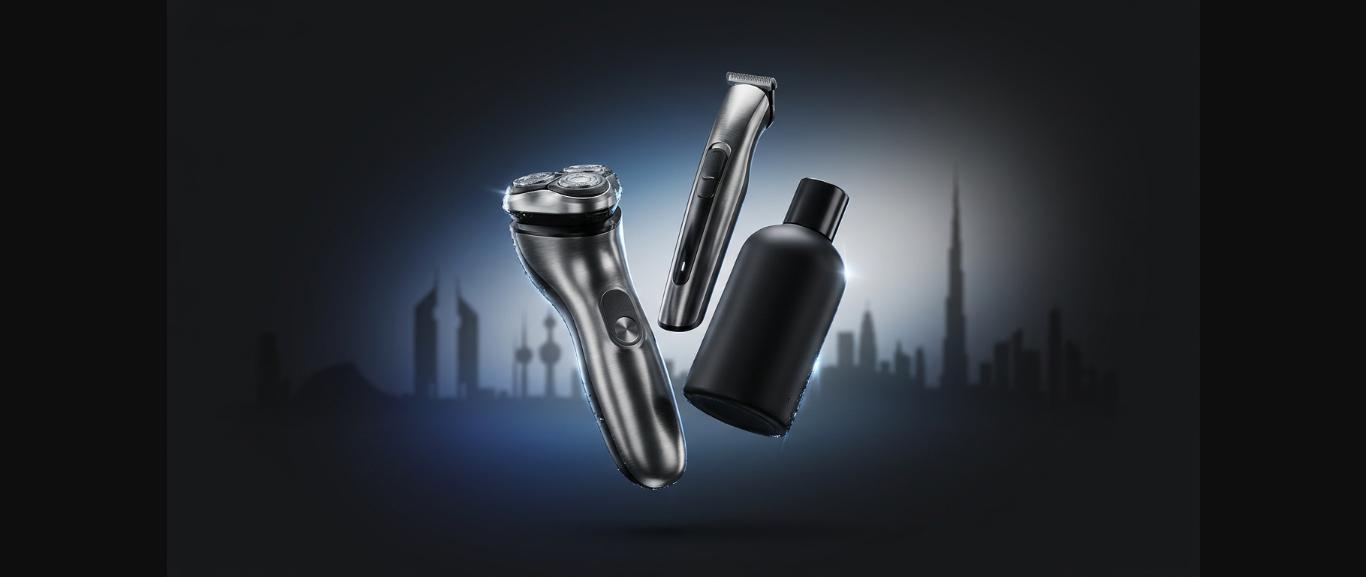
Dubai's personal care and grooming shelves used to be dominated by skincare and cosmetics photography. That is changing. Men's grooming brands, electric razor sellers, and grooming kit retailers across the UAE are now turning to CGI product visualization to sell tools, gadgets, and gift sets that used to require expensive photo shoots with metal and glass props.
The UAE Grooming Market Is Growing Fast
The UAE men's grooming market was valued at 288.45 million dollars in 2024 and is projected to reach 426.87 million dollars by 2030, growing at a compound annual rate of 6.75 percent, the highest CAGR in the Middle East and Africa region. Beard oils, hair styling gels, shaving kits, and men exclusive spa services are driving this growth, and brands selling these products online need visuals that match the pace of demand.
Traditional product photography struggles here. Chrome razor heads reflect studio lights unpredictably, trimmer housings show fingerprints and dust under macro lenses, and matte bottle finishes photograph inconsistently across lighting setups. Reshoots for a single SKU can take days, and Dubai brands launching multiple grooming products each season cannot always afford that timeline.
Why Personal Care Brands Need CGI Beyond Skincare Bottles
Most personal care CGI conversations focus on skincare, serums in glass droppers, cream jars, sunscreen tubes. Grooming tools are a different challenge entirely. An electric razor has moving parts, multiple material finishes, and functional details like charging ports and pivot heads that customers want to inspect before buying online.
CGI lets a brand render a single 3D model of a razor or trimmer and then generate unlimited scenes: floating hero shots, exploded views showing internal blades, lifestyle scenes with a bathroom counter backdrop, and close ups of the grip texture. None of this requires a second physical shoot. Once the 3D model exists, a brand's ecommerce team can request new angles or new backgrounds without waiting for a studio booking.
Rendering Electric Razors and Trimmers in 3D
Electric razors and trimmers are mechanically dense products, and CGI needs to represent that accurately or shoppers will not trust the image.
Showing Blade Detail and Metal Finishes
A rotary razor head has small pivoting discs, thin blade guards, and brushed or polished metal surfaces. Getting the reflections right matters because that is often the first thing a shopper zooms into on a product page. CGI artists build these components with accurate material properties, brushed steel, matte plastic, rubberized grips, so the render responds to light the way the real object would.
Battery Indicators and Charging Docks
Grooming tools increasingly include LED battery indicators, USB charging docks, and travel cases. Customers researching a razor online often want to see the charging stand or confirm the indicator light color before buying. CGI scenes can include these accessories in the same render, something that would normally require staging multiple physical props together for a photo shoot.
Grooming Kits and Gift Sets for Dubai Shoppers
Gift sets are a major category for Dubai grooming brands, especially around Ramadan, Eid, and UAE National Day. A typical kit might bundle a trimmer, a beard oil bottle, a comb, and a travel pouch, each with a different material and shape.
Photographing a multi item kit means arranging every piece by hand, adjusting lighting so no item casts a harsh shadow on another, and repeating that setup for every color variant or seasonal packaging update. With CGI, once each component exists as a 3D asset, a brand can recombine them into new kit configurations for every campaign, swap in a festive box design, or produce a dozen bundle variations without a single physical reshoot.
Packaging and Bottle CGI for Grooming Lines
Beard oils, aftershaves, and grooming sprays still rely on bottle photography, but the same efficiency applies. A matte black bottle with a metallic cap can be rendered once and then placed in unlimited settings, a marble bathroom counter, a minimalist product shot on white, or a lifestyle scene with a Dubai skyline in soft focus. Label text and cap details stay sharp and consistent across every version because they come from the same source model rather than separate photo sessions.
AR and 360 Views for Men's Grooming Ecommerce
Shoppers buying grooming tools online cannot pick up the product to check its size or weight, which makes return rates a real concern for this category. A 3D model built for CGI renders can also power a 360 degree spin viewer or an AR try before you buy feature on a product page, letting customers rotate a razor or trimmer and get a better sense of scale before adding it to cart. Brands that have added this kind of interactive view report fewer size related returns, since the guesswork of judging a handheld device from static photos is removed.
How Smapit Approaches Grooming Product CGI
Smapit builds a detailed 3D model of each grooming product using reference photos and manufacturer specs, then renders it across the scenes a brand needs, ecommerce listings, marketplace banners, and social ads. Because the 3D model is reusable, updating a product photo for a new campaign or a regional storefront becomes a matter of hours, not a new shoot. Brands can also request scale renders that show accurate proportions for a razor, trimmer, or kit alongside a hand or common household object, reducing the sizing questions that often drive customer support tickets.
For Dubai grooming brands preparing for a launch or a seasonal gift set campaign, working with a 3D model early in the process means packaging, lifestyle, and marketplace visuals can all be ready before the physical product even arrives in a warehouse. Reach out to start the conversation with our 3D visualization team.
Frequently Asked Questions
Does CGI work for products with moving parts like razors and trimmers?
Yes. 3D artists model each component separately, including blades, pivot points, and buttons, so the final render can show the product in different states, open, closed, or mid rotation.
How long does it take to build a 3D model of a grooming tool?
Turnaround depends on complexity, but a typical electric razor or trimmer model takes about one to two weeks from reference photos to final renders, faster than scheduling and completing a traditional studio shoot.
Can CGI show the actual material finish of a metal or matte plastic product?
Yes. Material properties like brushed steel, glossy plastic, and rubberized grips are built into the 3D model so renders reflect light accurately across different scenes and backgrounds.
Is CGI cost effective for seasonal gift sets that change every year?
Yes, often more so than photography. Once individual components exist as 3D assets, a brand can recombine them into new kit configurations or packaging themes without a new physical shoot for each version.
Do CGI renders support AR or 360 degree product views?
Yes. The same 3D model used for static renders can power an interactive 360 spin viewer or an AR preview, which is useful for grooming tools where shoppers want a sense of scale before buying.
Does Smapit work with grooming and personal care brands outside Dubai as well?
Yes. While this article focuses on the Dubai and UAE market, Smapit works with ecommerce brands across India, the US, and the UAE on 3D product visualization.